

 Experience
The Way of Incense(kodo)
Flower arrangement(kado), tea ceremony(sado) , and incense appreciation(kodo) are called the Three Japanese Arts of Refinement. However, it is difficult to find an opportunity to do incense appreciation.
Incense appreciation is also called “listening to incense.” This word comes from the expression “listening to the fragrance” rather than simply smelling it. It means listening with your heart to what the fragrance tells you. It’s similar to meditation.
Recently, I did kodo at a shop called “Kogen” in Nagoya that specializes in incense.
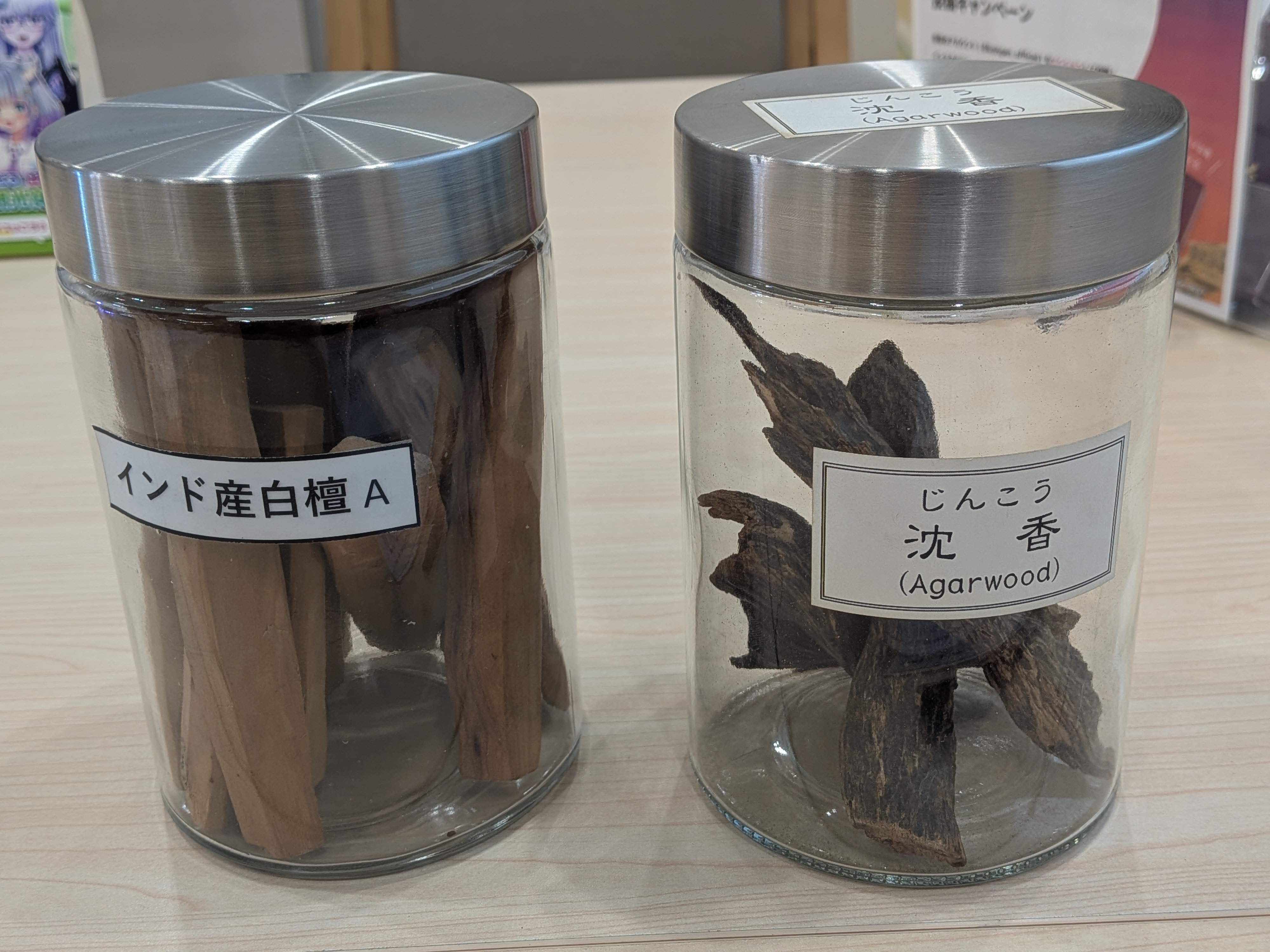
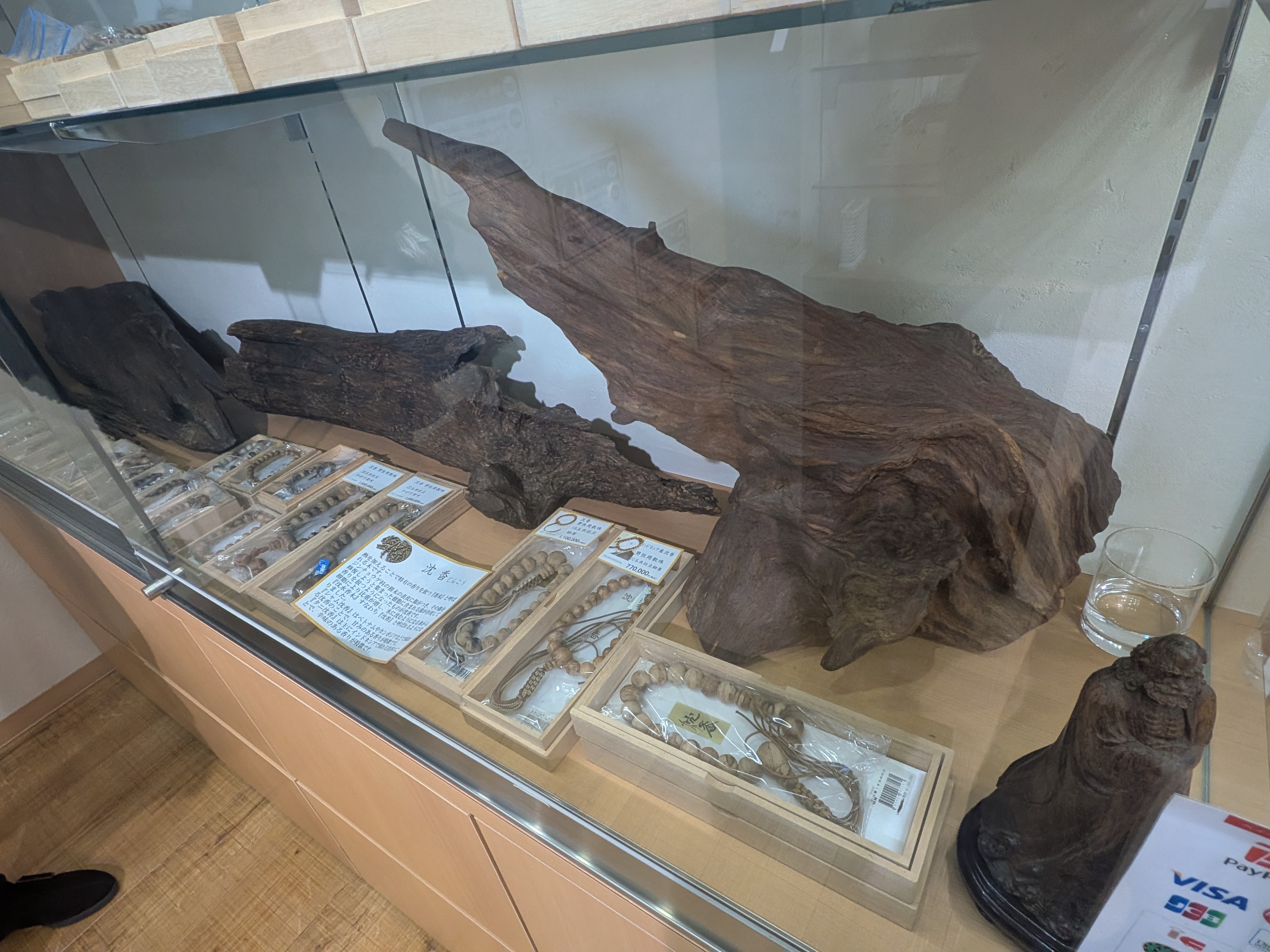
The aromatic woods for k00odo are primarily harvested in Indonesia, India, and Vietnam. Three are particularly famous: Byakudan, Jinko, and Kyara.
Byakudan is also known as white sandalwood, contains aromatic oils within the wood itself, so we felt a fragrance even at room temperature. It has a cool, sweet scent.
Jinko is formed when trees of the Thymelaeaceae family secrete resin as a defensive reaction to injury. The resin matures over many years. It sinks in water, so its alternative name is “Jinsuiko”(sinking water fragrance)
There are two types of Jinko: Siam whose scent is sweet when heated and Tani whose scent is spicy when heated.
Kyara is the highest quality and rarest type of Jinko. The scent is very delicate when it’s heated. Its fragrance is complex and cannot be artificially replicated. Kyara contains particularly high resin content among Jinko, evoking all five tastes—sour, bitter, sweet, spicy, and salty—and is regarded as the pinnacle of fragrant woods, they say, it is the “supreme treasure,” and the “king of fragrant woods.”
We also learned about the history of incense, discovering that the use of fragrant woods dates back to the Kofun period and they used incense in various ways in different eras. They used incense for kimono, used incense at the shrine or temples, used in the family alter when they pray like now.
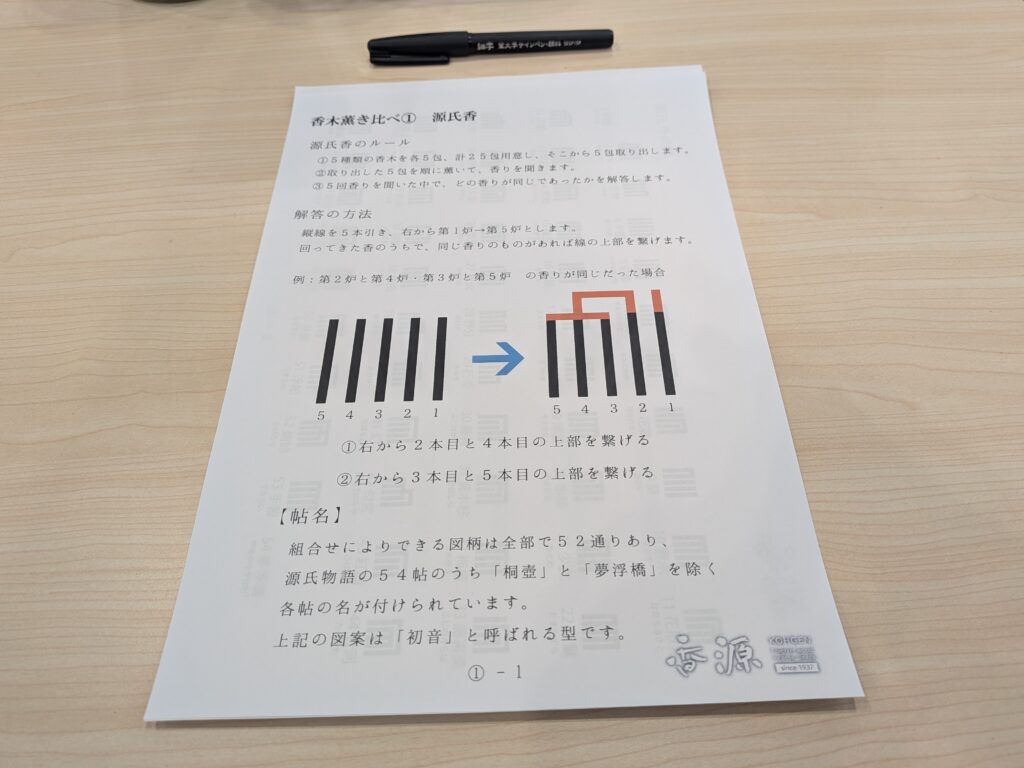
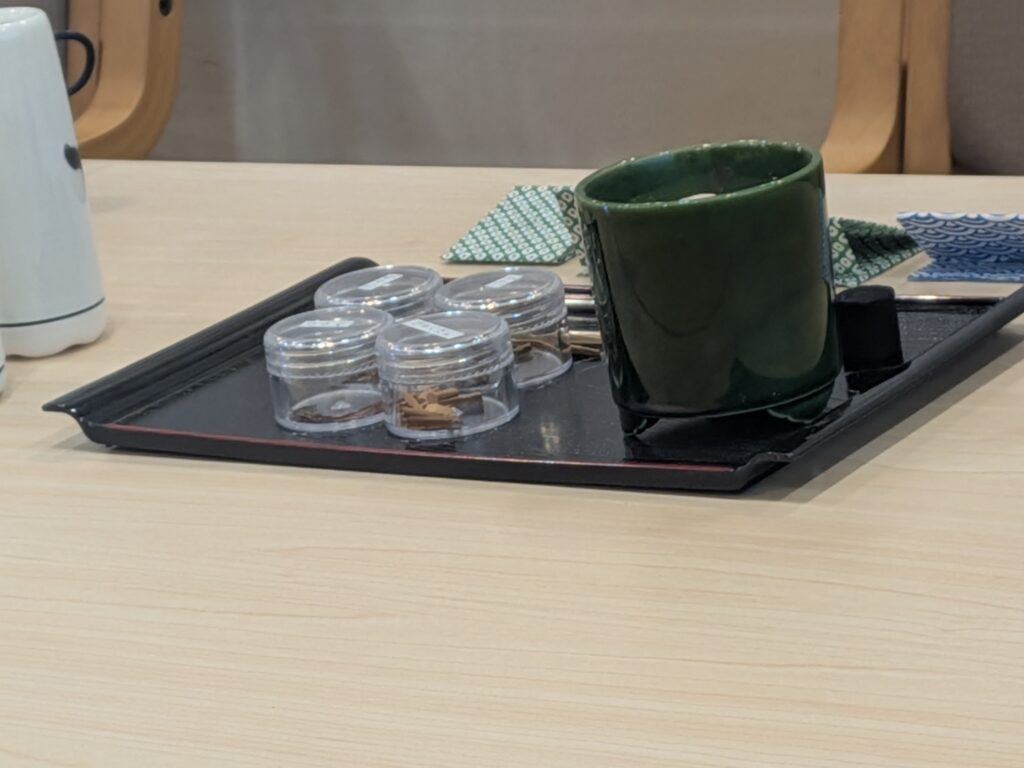
The incense appreciation practice took place in a very quiet space. First, each participant was given a sheet of paper with five vertical lines drawn on it. Next, we smelled several types of incense being burned in the incense burner. Then, we smelled five different incense types. Among these five, one or two were the same. We connected the lines between the identical ones to form a shape. This is called Genji-kō. It’s one of the games featured in The Tale of Genji.
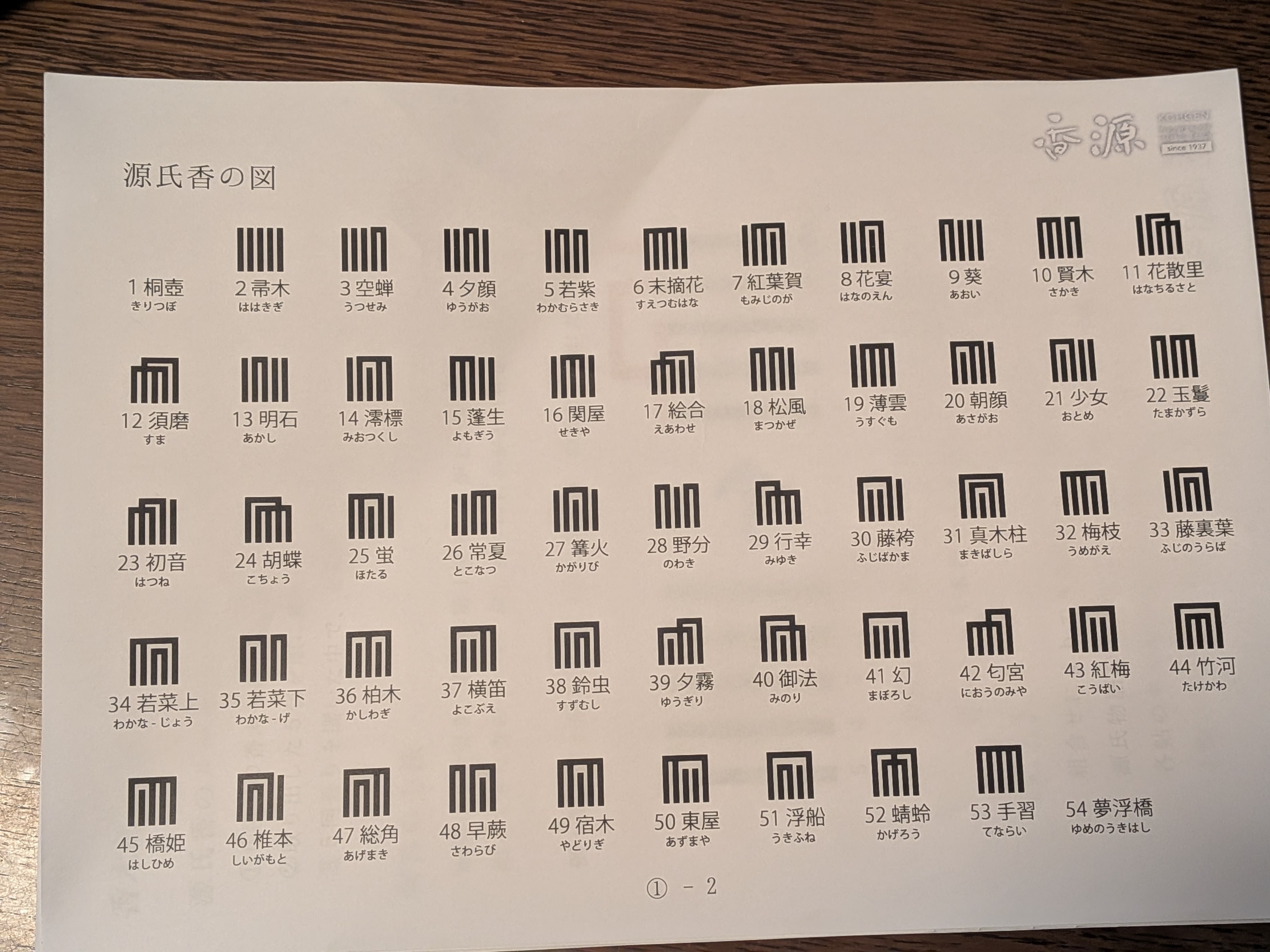
Actually, discerning the scents was very difficult, and identifying which ones were the same proved quite challenging. However, the time spent listening the incense was a precious moment, allowing for deep relaxation, calmness, and concentration.
I don’t think I’ll start doing kodo, but it was a wonderful experience for me.