

 Experience
Calligraphy
The other day, my husband and I went to a calligraphy event where we wrote Chinese characters with brushes. There are different styles of writing Japanese kanji including pictographs, regular script, semi-cursive script, and cursive script.
Pictographs, the origin of kanji, developed from simplified drawings of concrete objects. Regular script is written without breaking down the characters. Each stroke is written carefully. Semi-cursive script is a style that slightly relaxes the form of regular script, making it faster to write while remaining legible. Cursive script further relaxes the form, aiming for the simplest and fastest writing possible. The difference between semi-cursive and cursive script lies in the degree of simplification and speed. They say that semi-cursive is written at walking speed, while cursive script is written at running speed. Cursive script simplifies characters so much that all of the strokes connect, which sometimes requires specialized knowledge to read (making it difficult for the average person to read).
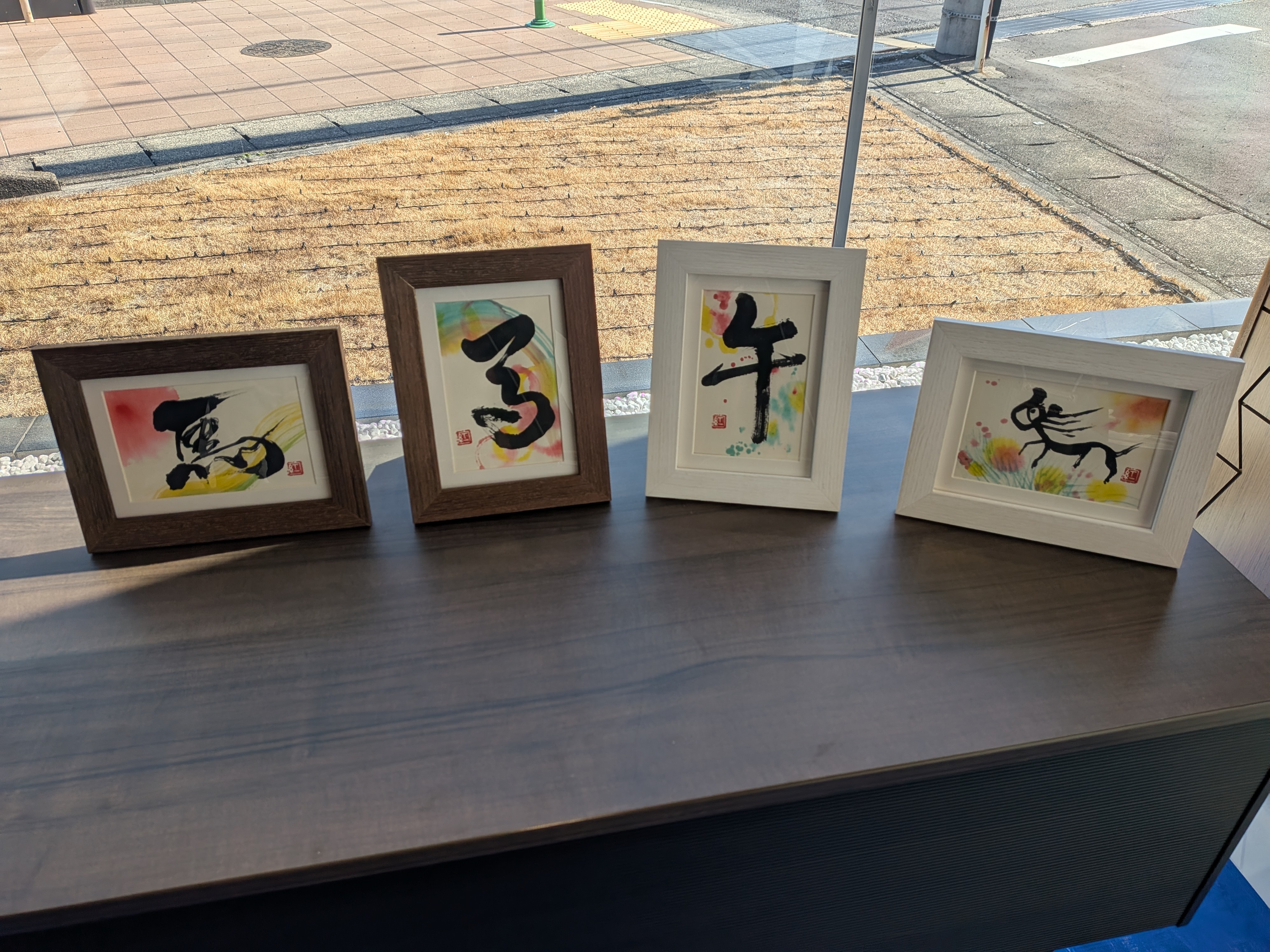
The character for “horse” looks completely different in pictographic, regular script, semi-cursive script, and cursive script.
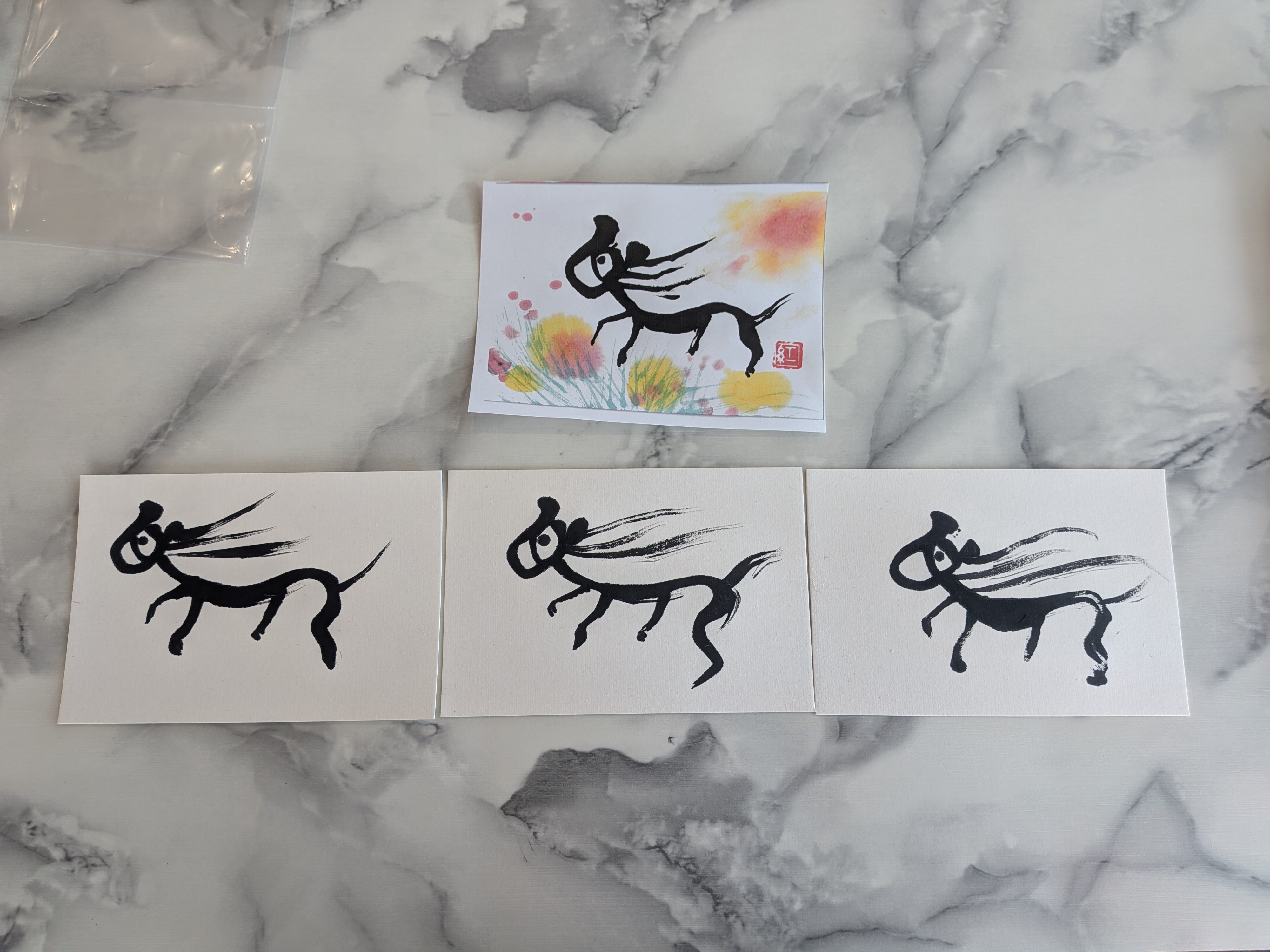
From right to left: pictographic → regular script → cursive script → semi-cursive script.
We each chose one of these to write.
My husband chose semi-cursive script; I chose pictographic script. Why did I choose pictographic script?
Because I’d never written pictographic script before.
We wrote the character on three sheets of paper and colored the best one, but
I forgot how terrible I am at drawing. To someone unfamiliar with pictographs, it looks like a clumsy drawing by a toddler~
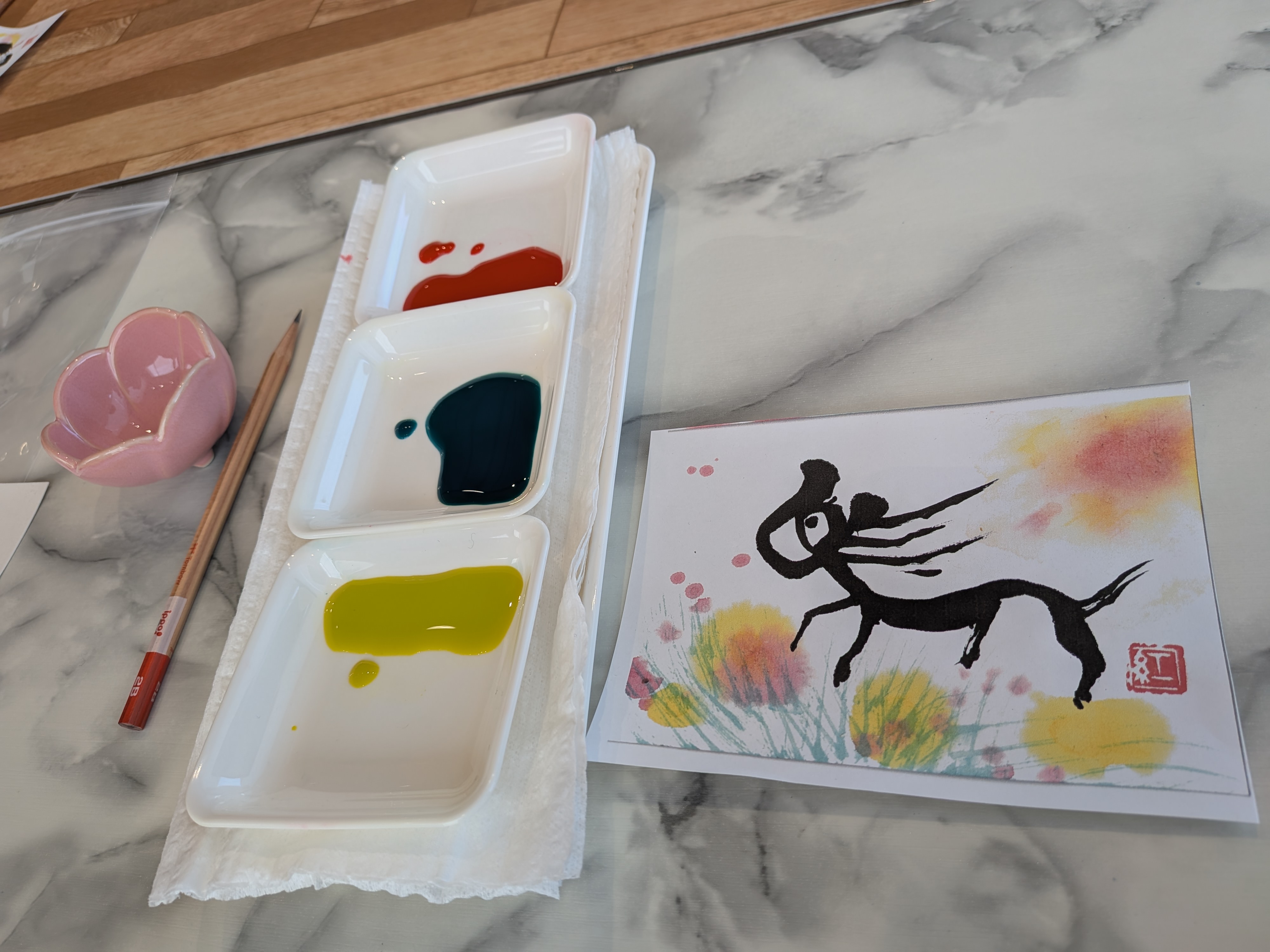
I think even my grandchildren could do better.
But luckily, it looked much better once I stamped the signature seal.
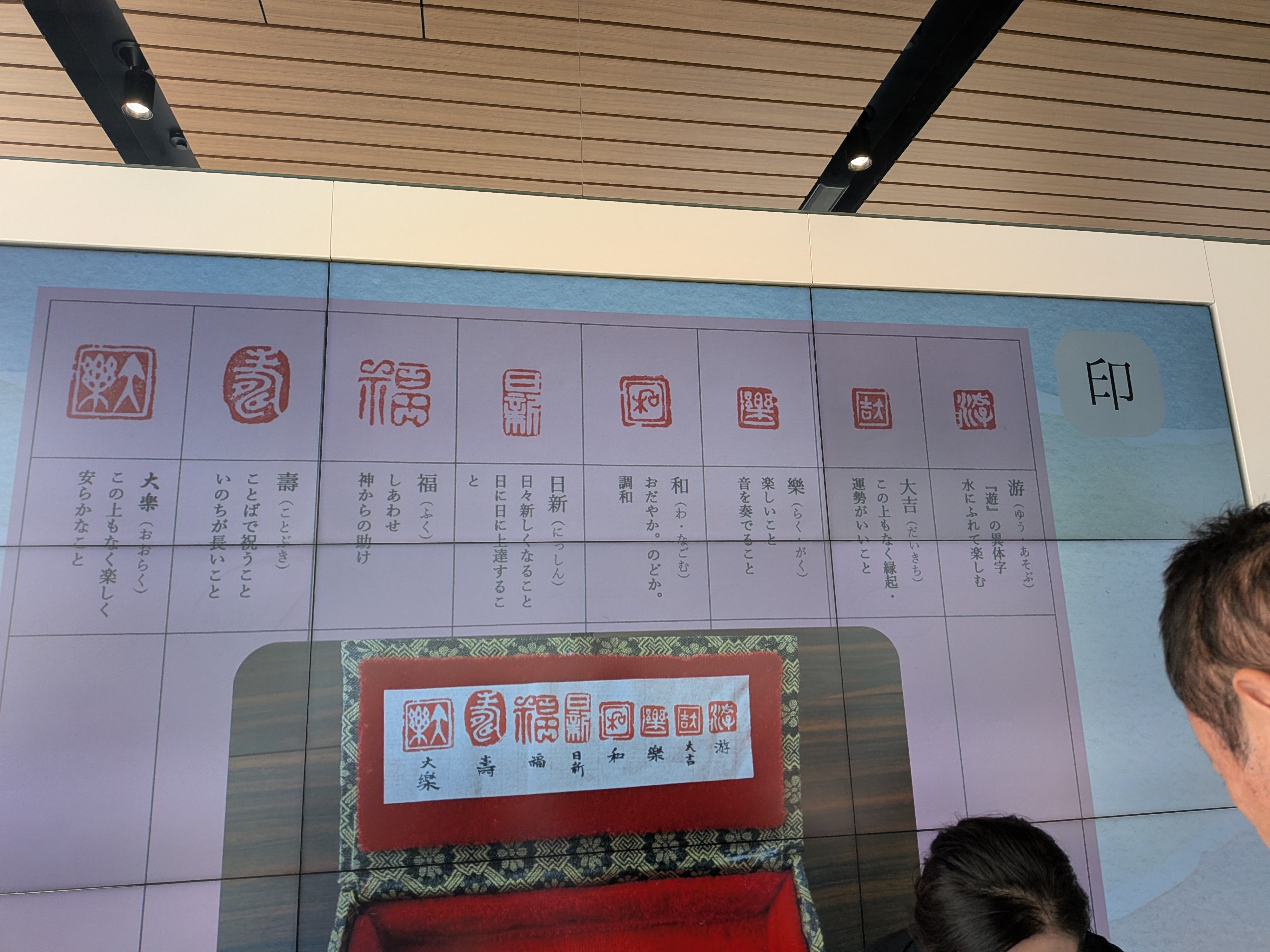
The seal is an abbreviation of “completion autograph” (rakkei kanshi). It signifies signing and stamping upon completing a work. Since I didn’t have a seal with my own name this time, I chose a generic one myself.
I chose “日新” (Nisshin). It means “to become new every day, to improve day by day.”
I thought it connected to my goal for this year-to constantly think of new ideas.
My husband chose “大楽” (Dai-raku). It means “supreme joy and peace.” Also, a lovely word.
We put them on a table side by side.
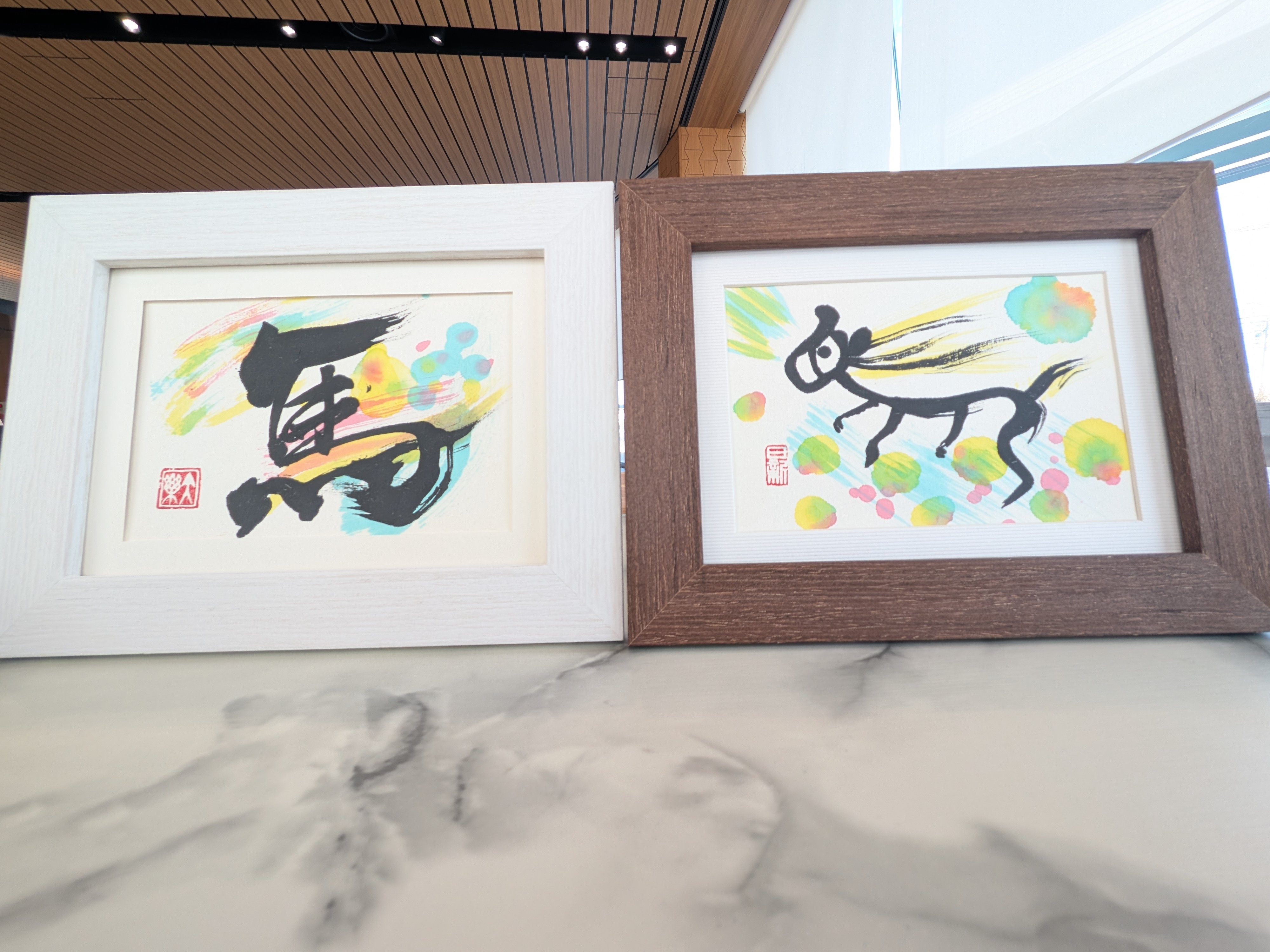
My husband’s solid, grounded “馬” (horse) and my bouncing, pictographic “馬” (horse).
It feels like it captures our life right now.
Though it was only two hours, it was a very relaxing and good time.